 0
0
 language
  English
 русский
 Français
 Español
 Português
 عربى
عربى
Which Stockpot Size Matches Your Kitchen Volume
May 15, 2026
Kitchen performance often depends on how well cookware capacity aligns with daily cooking volume. A mismatched pot size can cause overflow, uneven heating, or wasted energy. Our company understands this balance deeply through our cookware development line, including Wholesale Stockpot solutions for bulk cooking systems and Wholesale Frying Pan designs optimized for everyday sautéing and searing tasks.
Modern kitchens vary widely in household size, menu structure, and batch cooking habits. A properly matched stockpot size improves efficiency in boiling, simmering, and broth preparation, while frying pans complement surface cooking needs in parallel workflows.
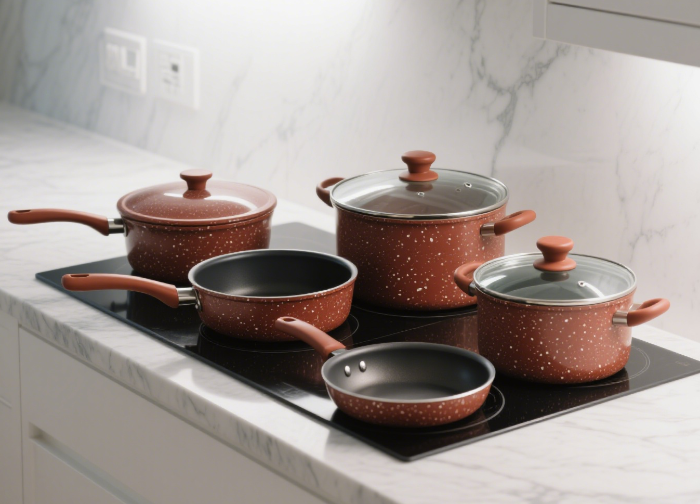
Kitchen volume is the foundation of stockpot selection
- Home kitchens usually fall into small (1–2 people), medium (3–5 people), or large family cooking volumes
- Stockpot capacities typically range from 6 quarts to 20+ quarts for domestic use
- Usable capacity is usually 70–80% of labeled volume to prevent boil-over
Typical mapping:
- 6–8 qt → small family soups, pasta, daily boiling
- 10–12 qt → batch cooking, stews, bone broth
- 16–20 qt → large gatherings, meal prep, semi-commercial use
Matching stockpot size to kitchen usage volume
- Small households benefit from a 6-qt compact structure
- easier storage
- faster heating due to smaller thermal mass
- Medium kitchens often perform well with 8–12 qt range
- flexible for soups and bulk pasta
- stable heat retention during long simmering
- High-volume kitchens or catering setups require 16 qt+
- designed for large liquid displacement
- suitable for seafood boiling or stock preparation
Stockpot dimensions also influence usability:
- 10–12 qt models often measure around 11–12 inches diameter with tall walls
- Taller walls reduce evaporation and support long simmering cycles
Relationship between frying pan usage and stockpot choice
Cookware systems work as a set rather than isolated tools:
- Wholesale Frying Pan
- handles surface cooking: eggs, searing, stir-frying
- typical sizes: 8–12 inches diameter
- supports fast heat response and evaporation control
- Stockpots manage volume cooking:
- soups, broths, pasta water, sauces
- deeper structure prevents spillover during boiling
Balanced kitchen planning means:
- frying pan = surface efficiency
- stockpot = volume efficiency
Heat performance considerations tied to pot size
- Smaller stockpots heat faster due to concentrated energy transfer
- Larger pots require longer preheating but maintain stability during simmering
- Stainless steel with aluminum core improves uniform heat distribution across base and walls
Technical behavior:
- 6 qt → fastest boil response
- 8–12 qt → balanced heating and capacity
- 16 qt+ → slower heating but nice batch consistency
Material and structural parameters affecting usable volume
Key engineering factors:
- Wall height vs diameter ratio influences evaporation rate
- Thick-base construction improves heat retention
- Lid design reduces moisture loss during long cooking cycles
- Safe fill level should remain below 80% of total volume to avoid overflow
Practical stockpot size selection guide
- 6 qt
- compact kitchens, daily cooking
- soups for 2–3 servings
- 8 qt
- universal household option
- supports pasta, stews, chicken stock
- 12 qt
- batch cooking and family meal prep
- suitable for bone broth and seafood boil
- 16–20 qt
- catering kitchens or commercial-style cooking
- large-scale boiling and preservation tasks
How our company approaches cookware volume design
Our company develops cookware systems that integrate real kitchen volume behavior with structural durability:
- optimized heat conduction layers for stable simmering
- reinforced handles for heavy liquid loads in large stockpots
- matching cookware ecosystem between frying and boiling categories
- scalable production for OEM and wholesale markets
We design each Wholesale Stockpot and Wholesale Frying Pan series with attention to:
- thermal efficiency
- ergonomic balance
- long-cycle durability in industrial and home kitchens
Whether the goal is everyday household cooking or scaled batch preparation, matching cookware capacity to real usage patterns creates a more efficient kitchen system overall.
Share:
Related Products

Need Custom Cookware? OEM & ODM Experts – Contact Us Today!
-

0086-578-3183238
-

0086-13750930689
-

-

86-13750930689
https://www.pinterest.com/zhuohao2021/ -

No.3 Xinye Road, Jinyun Industrial Area, Zhejiang, China.
Copyright © Zhejiang Wantong Industry & Trade Co., Ltd.

OEM/ODM Kitchen Cookware Manufacturer