 0
0
 language
  English
 русский
 Français
 Español
 Português
 عربى
عربى

Is Your Cookware Certified for Global Markets
May 22, 2026
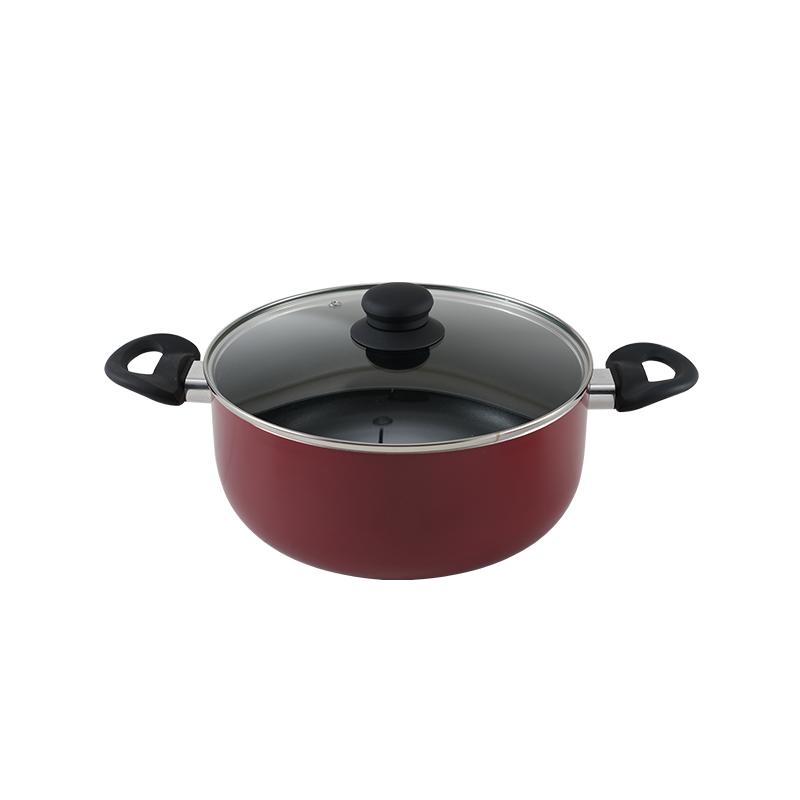
Global cookware buyers are no longer focused only on appearance or price. Certification, compliance, and material traceability now define whether cookware can enter international markets such as Europe, North America, and Southeast Asia. At our company, we manufacture export-ready kitchenware designed for strict regulatory requirements, covering everything from household sets to Wholesale Frying Pan production lines and large-capacity Wholesale Stockpot ranges used in commercial kitchens.
As demand grows across retail and foodservice channels, certification becomes the foundation of trust between manufacturers, distributors, and end users.
1. Why Global Certification Matters in Cookware Trade
- Ensures compliance with food-contact safety regulations
- Reduces export rejection risks at customs
- Builds credibility for OEM and ODM partnerships
- Supports long-term retail and e-commerce distribution
Markets such as the EU require LFGB compliance, while the US focuses on FDA food-contact standards. Without these approvals, even well-designed cookware may be restricted from sale.
2. Core Certifications Required in Different Regions
- LFGB (Germany/EU): Tests for heavy metals, coating safety, and odor neutrality
- FDA (USA): Focuses on food-contact material safety
- ISO 9001: Verifies stable quality management systems
- SGS Testing Reports: Independent third-party validation
Our company ensures every production batch undergoes multi-layer inspection before shipment, aligning with international compliance systems.
3. Material Safety Standards in Modern Cookware
Global buyers increasingly evaluate the raw materials used in cookware construction.
- Aluminum alloy purity control above 98% for stability
- Food-grade non-stick coatings free from PFOA
- Heat-resistant lacquer coatings tested up to 250°C–300°C
- Rivet and handle safety tested under mechanical stress cycles
These technical requirements directly affect product approval in regulated markets.
4. Engineering Requirements for Export-Ready Cookware
Certification is not only about paperwork—it is deeply linked to production engineering.
- Base thickness control: 1.8mm–4.0mm depending on cookware type
- Heat distribution deviation is controlled within ±5%
- Non-stick layer adhesion tested with the cross-hatch method
- Salt spray corrosion resistance exceeding 48–72 hours
These parameters ensure products perform consistently across different cooking environments.
5. Product Categories Commonly Exported
Our manufacturing system supports a wide range of cookware products designed for global distribution.
- Household cookware sets for retail chains
- Commercial-grade induction-compatible pans
- Deep cooking vessels for hospitality kitchens
- Lightweight aluminum cookware for mass retail markets
Within these categories, Wholesale Frying Pan solutions are widely used in supermarket supply chains, while Wholesale Stockpot units are preferred in catering and restaurant operations due to capacity and heat efficiency.
6. Quality Control System Behind Certification Compliance
Certification approval depends heavily on factory-level control systems.
- Incoming raw material inspection (chemical composition testing)
- In-process production monitoring (temperature and coating thickness control)
- Final product testing (drop test, adhesion test, heat cycle test)
- Packaging integrity inspection for export logistics
Every batch is recorded with traceable production data to meet audit requirements.
7. Coating Technology and Performance Stability
Modern cookware certification strongly evaluates coating safety and durability.
- Multi-layer non-stick coating structure for abrasion resistance
- Reinforced primer layer improving adhesion strength
- High-temperature curing process to stabilize chemical structure
- Scratch resistance tested under repeated utensil contact cycles
These technologies ensure cookware remains stable during long-term use in global kitchens.
8. Export Packaging and Compliance Labeling
Global markets require strict packaging and labeling rules.
- Multilingual instruction manuals (EN, DE, FR, ES)
- Barcode and batch traceability labeling
- Eco-friendly recyclable carton materials
- Drop-test compliant export packaging structure
Proper labeling ensures smoother customs clearance and retail shelf acceptance.
9. Why Buyers Choose Certified Manufacturers
International distributors prefer certified suppliers because it reduces risk across the supply chain.
- Faster customs clearance and fewer shipment delays
- Lower product liability risk in retail markets
- Easier entry into supermarket and e-commerce platforms
- Stronger brand trust among end consumers
Our company supports OEM/ODM projects with full documentation for global certification needs.
10. Our Manufacturing Commitment
We operate as a professional cookware manufacturer focused on export-ready production systems. Every stage—from raw material selection to final inspection—is designed to meet international standards.
More product and company details are available on our website.
We continue improving engineering precision and compliance systems to ensure every product shipped from our factory can confidently enter global markets.
Share:
Related Products

Need Custom Cookware? OEM & ODM Experts – Contact Us Today!
-

0086-578-3183238
-

0086-13750930689
-

-

86-13750930689
https://www.pinterest.com/zhuohao2021/ -

No.3 Xinye Road, Jinyun Industrial Area, Zhejiang, China.
Copyright © Zhejiang Wantong Industry & Trade Co., Ltd.

OEM/ODM Kitchen Cookware Manufacturer