 0
0
 language
  English
 русский
 Français
 Español
 Português
 عربى
عربى
What MOQ Fits Your First Cookware Order
May 08, 2026
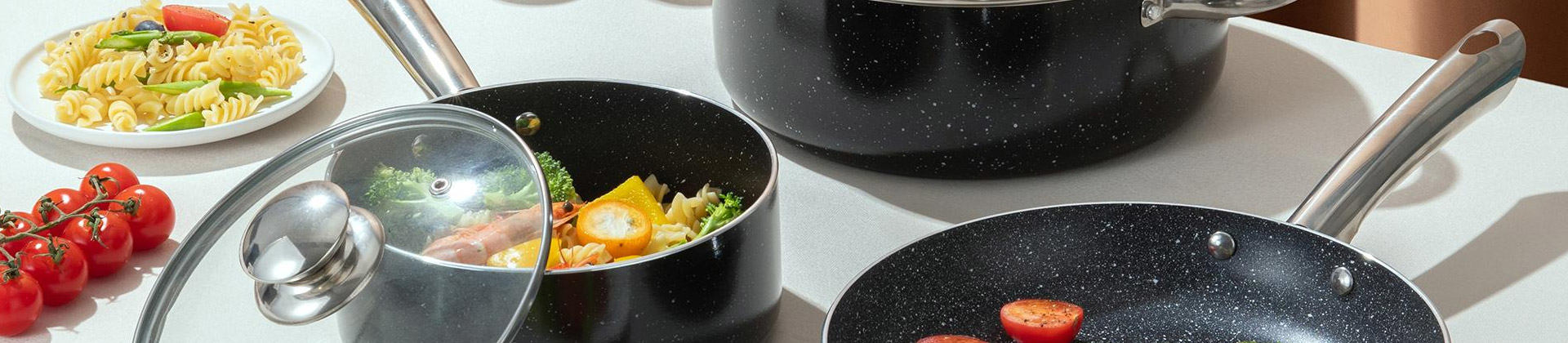
Understanding Minimum Order Quantity (MOQ) plays a key role before placing an initial purchase with a cookware supplier. A typical Wholesale Frying Pan program or a full Wholesale Stockpot line often follows MOQ rules that determine how small or large your initial order can be without affecting pricing or production efficiency. We focus on helping buyers balance cost, risk, and scalability through practical order planning at our company, and you can learn more about our cookware production.
MOQ (Minimum Order Quantity) usually reflects the lower number of units a factory is willing to produce in one batch. In cookware manufacturing, it is closely tied to raw material usage, machine setup, coating lines, and packaging efficiency. A better understanding helps avoid overstocking or underordering during your initial sourcing stage.
MOQ Reality in Cookware Manufacturing
- Typical stainless cookware MOQ ranges from 500–1000 units per SKU
- Custom logo or packaging may increase MOQ to 2000–5000 units
- Full cookware sets often require higher batch consistency than single items
- Each finish (polished, matte, non-stick coating) may require separate production runs
These numbers are not arbitrary; production lines must be calibrated for coating thickness, heat distribution testing, and handle assembly consistency.
First Order Strategy for Frying Pan Buyers
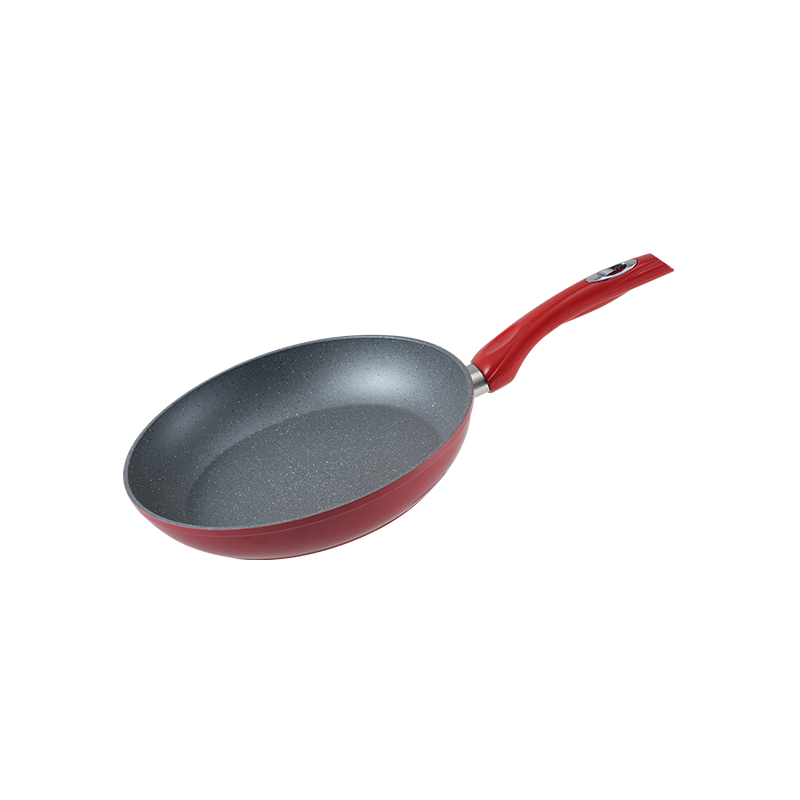
A Wholesale Frying Pan order is usually the entry point for new brands because it is a single SKU with high market demand.
- Start with 300–800 pcs for market testing (if supplier allows flexible MOQ)
- Thickness options commonly used: 2.3mm–3.0mm aluminum or stainless steel base
- Non-stick coating layers: 2-layer or 3-layer PFOA-free coating systems
- Handle material choices: stainless steel hollow handle or bakelite heat-resistant handle
- Packaging: standard kraft box reduces initial MOQ pressure
This approach helps validate demand before expanding into full cookware sets.
Stockpot Orders and Production Efficiency
A Wholesale Stockpot generally requires more material and deeper stamping processes, which influences MOQ expectations.
- Standard capacity range: 3L–20L cookware pots
- Steel thickness: 0.6mm–1.2mm stainless steel for durability balance
- Base construction: encapsulated induction base improves heat distribution
- MOQ often increases due to larger raw sheet usage per unit
- Lid options: tempered glass lid or stainless steel lid with steam vent
Stockpots also involve heavier logistics packaging, which increases per-unit production coordination.
How We Help First-Time Buyers Control Risk
We design MOQ strategies based on buyer stage, not only factory efficiency.
- Small batch sampling before full production approval
- Mixed SKU container loading (frying pan + stockpot combinations)
- Shared tooling solutions for logo printing to reduce setup cost
- Flexible packaging customization levels depending on order size
Our company focuses on reducing entry barriers while maintaining stable production quality.
Technical Factors That Influence MOQ
- Die-casting mold cost spreads across production volume
- Coating line setup requires batch continuity for color consistency
- Energy consumption per batch becomes efficient only after threshold volume
- Quality inspection cycles (heat test, handle pull test) require standardized runs
These factors explain why MOQ exists beyond pricing alone.
Choosing the Right MOQ for Your First Order
A practical decision framework:
- Market testing stage → low MOQ frying pan focus
- Brand building stage → mixed cookware set expansion
- Distribution stage → full container-level stockpot + pan combination
- Private label stage → higher MOQ but lower unit cost advantage
MOQ is not only a limitation; it is a planning tool for scaling cookware business safely.
Share:
Related Products

Need Custom Cookware? OEM & ODM Experts – Contact Us Today!
-

0086-578-3183238
-

0086-13750930689
-

-

86-13750930689
https://www.pinterest.com/zhuohao2021/ -

No.3 Xinye Road, Jinyun Industrial Area, Zhejiang, China.
Copyright © Zhejiang Wantong Industry & Trade Co., Ltd.

OEM/ODM Kitchen Cookware Manufacturer