 0
0
 language
  English
 русский
 Français
 Español
 Português
 عربى
عربى
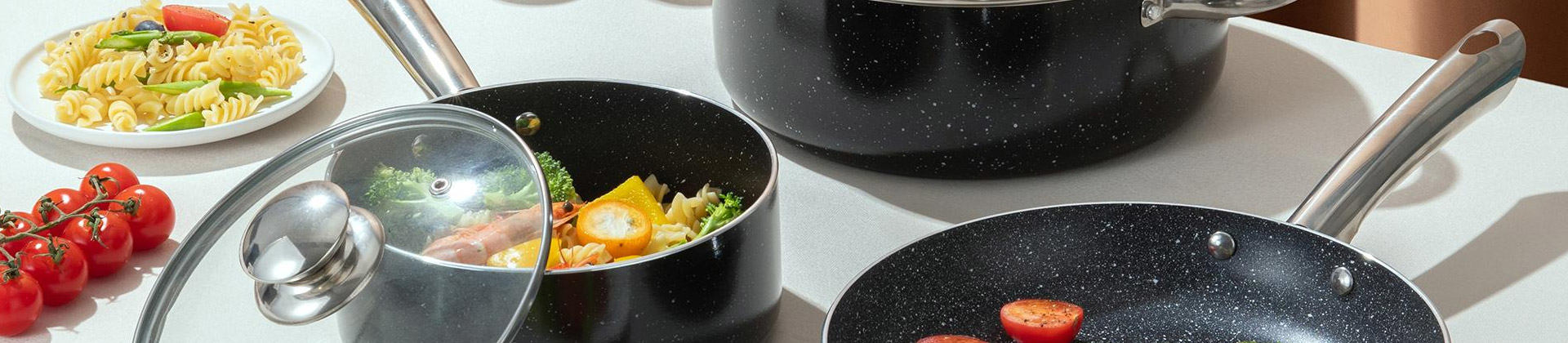
China Aluminum Cookware Factory Non-Stick Coating Technology and Materials
Jun 05, 2026
Aluminum cookware is widely used in modern kitchen production due to its thermal conductivity and forming flexibility. In a China Aluminum Cookware Factory, production usually includes forming, surface treatment, and coating processes that together determine the final cookware performance.
At the same time, Non-Stick Cookware Wholesale demand continues to influence how factories select coating systems and manage material compatibility. Wholesale buyers often focus on consistency, safety compliance, and surface durability, which shape manufacturing decisions from the early production stage.
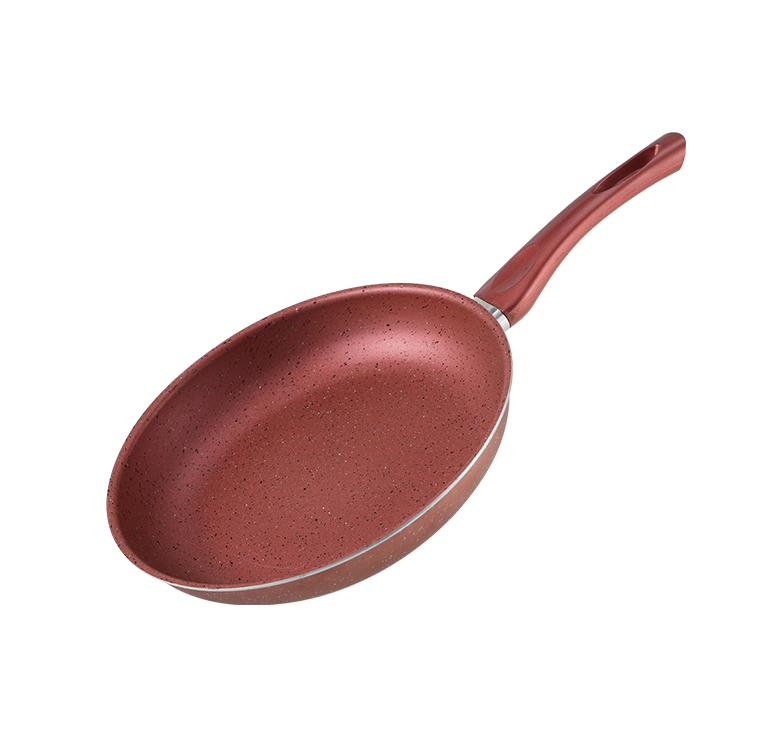
Aluminum Material Selection and Surface Preparation
Aluminum alloys used in cookware are selected based on heat transfer capability and structural stability. A China Aluminum Cookware Factory generally evaluates alloy behavior during forming and coating stages rather than focusing on a single material property.
Before coating, the aluminum surface undergoes cleaning and roughening processes. These steps remove impurities and create a surface texture that supports coating adhesion. Surface preparation is important because it directly affects coating uniformity and long-term stability.
For Non-Stick Cookware Wholesale supply requirements, consistent surface treatment helps ensure stable appearance and performance across large production volumes.
Non-Stick Coating Types in Production
Non-stick coatings used in cookware are mainly divided into PTFE-based systems and ceramic-based systems.
PTFE coatings are applied in multiple layers and provide smooth surface performance for food release. Ceramic coatings are produced through sol-gel processes and form a harder surface structure suitable for moderate temperature use.
In a China Aluminum Cookware Factory, coating selection depends on product positioning and expected usage conditions. In Non-Stick Cookware Wholesale markets, coating type is often evaluated based on usability and durability expectations.
Multi-Layer Coating Application Process
Coating systems are generally built in layers rather than a single application.
The primer layer connects the aluminum surface with subsequent coatings and improves adhesion. The middle layer adds thickness and helps stabilize surface structure. The top layer forms the final cooking surface and influences smoothness and food release performance.
A China Aluminum Cookware Factory applies these layers under controlled conditions to maintain consistency. For Non-Stick Cookware Wholesale distribution, layered systems help support stable product performance across different cooking environments.
Thermal Behavior and Material Interaction
Aluminum conducts heat quickly, which affects how coatings respond during cooking. Differences in thermal expansion between aluminum and coating layers can influence long-term surface stability.
Proper material matching reduces the risk of coating separation or uneven wear. Factories usually test coating behavior under repeated heating and cooling conditions to observe performance stability.
From a Non-Stick Cookware Wholesale perspective, stable thermal behavior supports consistent cooking results in different kitchen applications such as frying and boiling.
Surface Preparation Techniques
Surface preparation methods include mechanical treatment and chemical cleaning. These processes improve coating adhesion by removing contaminants and adjusting surface roughness.
A China Aluminum Cookware Factory integrates these steps into the standard production flow. This helps ensure that cookware surfaces are ready for coating application.
For Non-Stick Cookware Wholesale supply chains, uniform surface preparation reduces variation between batches and supports consistent product quality perception.
Safety and Functional Stability Considerations
Cookware coatings are designed to maintain stability under normal cooking temperatures. Modern coating systems are developed to reduce unwanted chemical reactions and maintain surface integrity during repeated use.
A China Aluminum Cookware Factory evaluates both material compatibility and coating stability during production planning. For Non-Stick Cookware Wholesale buyers, safety and performance consistency are important factors when selecting suppliers.
Aluminum materials and non-stick coating systems work together to determine cookware performance. Each stage of production, including surface preparation and coating application, contributes to the final product behavior and usability.
Share:
Related Products

Need Custom Cookware? OEM & ODM Experts – Contact Us Today!
-

0086-578-3183238
-

0086-13750930689
-

-

86-13750930689
https://www.pinterest.com/zhuohao2021/ -

No.3 Xinye Road, Jinyun Industrial Area, Zhejiang, China.
Copyright © Zhejiang Wantong Industry & Trade Co., Ltd.

OEM/ODM Kitchen Cookware Manufacturer