 0
 language
 English
 русский
 Français
 Español
 Português
 عربى

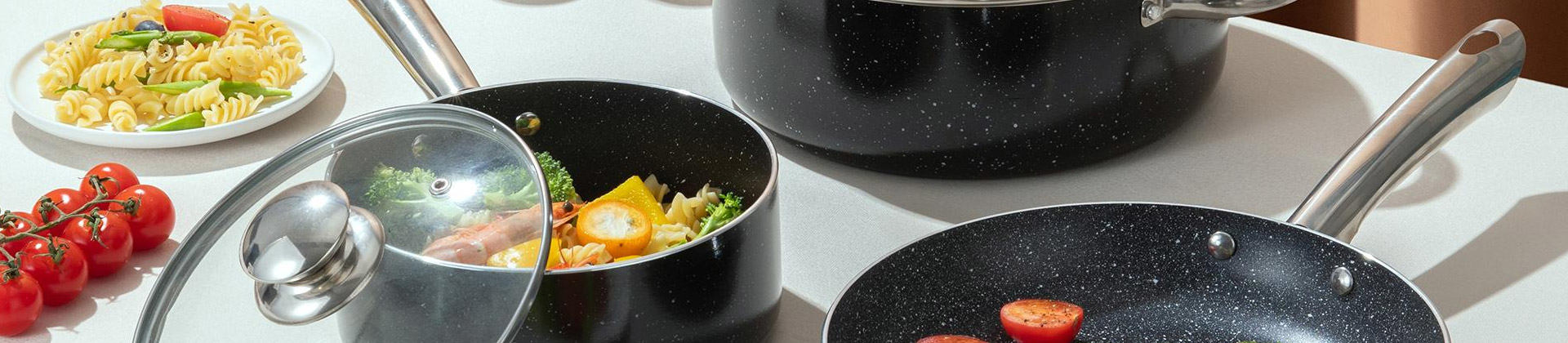
Aluminum Frying Pan Market Trends: Practical Features Shaping Cookware Purchasing Decisions
Nov 23, 2026
Cookware buyers are paying closer attention to how products perform in real kitchens rather than focusing only on appearance and price. The Aluminum Frying Pan remains widely used in household cookware collections because of its lightweight structure, efficient heat transfer, and flexible design options. Meanwhile, consumer interest in easier cleaning, reduced cooking oil use, and compatibility with modern kitchen appliances is influencing product development. For overseas distributors and private-label brands, understanding these preferences helps identify suitable products and avoid unnecessary changes after production.

Demand for Multi-Purpose Cookware
Many households prefer cookware that can handle different everyday cooking tasks without taking up too much storage space. A frying pan used for eggs, vegetables, meat, and simple one-pan meals offers practical value for daily kitchen use.
This creates opportunities for cookware suppliers to develop different pan diameters, depths, and handle configurations. Buyers should consider the cooking habits of their target customers when selecting product specifications rather than choosing sizes based on appearance alone.
Surface Performance and Easy Food Release
A smooth cooking surface is an important feature for consumers who want to prepare meals with less sticking and spend less time cleaning. Nonstick aluminum frying pans are therefore common in cookware collections targeting everyday household use.
However, coating performance depends on more than the coating material itself. Surface preparation, application consistency, and production control all influence the finished product.
When evaluating samples, buyers should check for visible coating defects, uneven surfaces, and differences in food-release performance. These checks help establish clearer quality expectations before placing larger orders.
Growing Attention to Coating Materials
Discussions about PFAS and cookware safety have encouraged consumers to examine product descriptions more carefully. Some buyers are also showing interest in ceramic-coated frying pans and other coating alternatives.
For importers and retailers, accurate product information is essential. Manufacturers should clearly identify the coating type and provide relevant test reports or compliance documents where applicable. Avoiding vague claims helps brands communicate product features more responsibly.
Compatibility With Modern Kitchen Appliances
Induction cooktops have influenced the construction requirements of aluminum cookware. Since ordinary aluminum is not magnetic, induction-compatible frying pans generally need an additional magnetic base.
The base should be properly attached and designed to maintain stable contact with the cooktop. Buyers should also confirm whether the product supports gas and electric cooking when targeting customers who use different kitchen appliances.
Storage and Space-Saving Design
Kitchen storage has become another consideration in cookware selection, particularly for apartments and smaller households. Frying pans with practical handle designs and stackable structures can help retailers address these everyday concerns.
For manufacturers, product dimensions, handle positioning, and protective packaging should be considered together. A design that is convenient to store can also help create a more attractive cookware collection for retail customers.
Production Quality and Supplier Communication
For B2B buyers, a competitive product needs consistent manufacturing quality. Differences in body thickness, coating application, handle assembly, and surface finishing may affect customer feedback and return rates.
Before confirming an order, buyers should discuss material specifications, dimensional tolerances, inspection procedures, and packaging requirements with the supplier. Reviewing a production sample and confirming the approved specifications can help reduce misunderstandings during bulk manufacturing.
Building Cookware Collections Around Consumer Needs
Different sales channels require different product combinations. Supermarkets may prefer practical everyday frying pans, while online cookware brands may focus more on appearance, coating features, and product presentation.
As a manufacturer, we consider these differences when discussing pan sizes, surface finishes, handle styles, and customized packaging with overseas customers.
A well-developed Aluminum Frying Pan should balance cooking performance, convenient maintenance, suitable construction, and consistent production quality. By understanding how consumers actually use their cookware, importers and distributors can make more informed product decisions and build collections that respond to changing kitchen preferences.
Share:
Related Products

Need Custom Cookware? OEM & ODM Experts – Contact Us Today!
-

0086-578-3183238
-

0086-13750930689
-

-

86-13750930689
https://www.pinterest.com/zhuohao2021/ -

No.3 Xinye Road, Jinyun Industrial Area, Zhejiang, China.
Copyright © Zhejiang Wantong Industry & Trade Co., Ltd.

OEM/ODM Kitchen Cookware Manufacturer