 0
 language
 English
 русский
 Français
 Español
 Português
 عربى

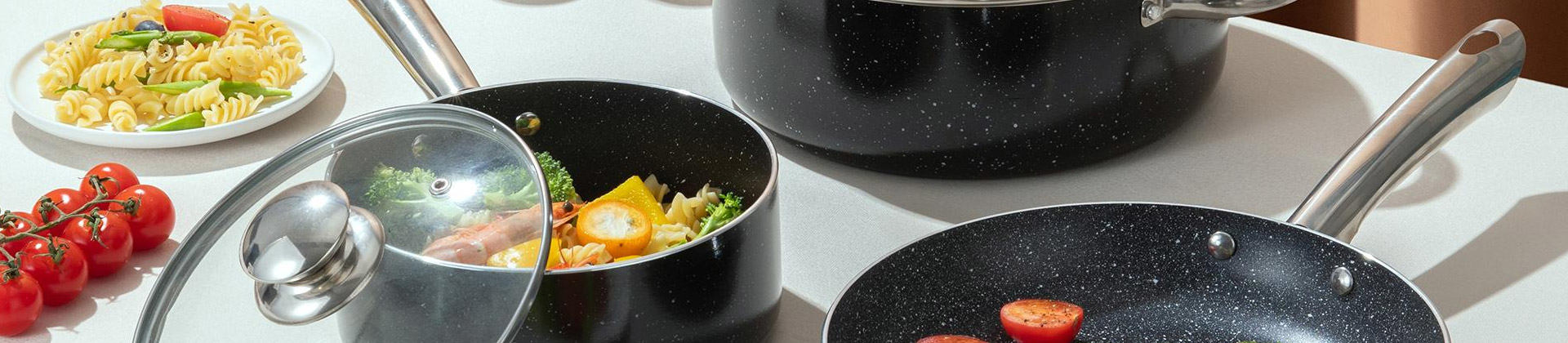
Aluminum Frying Pan Manufacturing: Balancing Lightweight Design and Long-Term Performance
Nov 20, 2026
As consumers look for cookware that is easy to handle, convenient to clean, and suitable for different cooking styles, the Aluminum Frying Pan continues to attract attention from overseas retailers and cookware distributors. Beyond appearance and price, buyers are increasingly concerned about pan weight, bottom stability, coating durability, and packaging efficiency. These factors influence both consumer satisfaction and the performance of cookware products in competitive retail markets. For manufacturers, understanding these requirements helps create products that address practical cooking needs.

Lightweight Construction Without Sacrificing Stability
One reason aluminum is widely used in frying pan production is its relatively low weight. Compared with some other cookware materials, aluminum pans are easier to lift, move, and handle during everyday cooking.
However, reducing material thickness without considering structural strength may cause deformation or an unstable base. Manufacturers need to balance body thickness, pan diameter, and forming techniques to maintain a suitable structure.
For bulk buyers, checking the pan's weight and overall construction is important when comparing products with similar dimensions.
Scratch Resistance and Coating Maintenance
Nonstick coating quality directly affects how consumers use and maintain their cookware. Frequent contact with unsuitable utensils and abrasive cleaning tools can gradually damage the cooking surface.
When selecting an aluminum nonstick frying pan, buyers should pay attention to coating adhesion, surface uniformity, and resistance to regular wear. Clear product care instructions are also useful for reducing unnecessary complaints.
Flat Bottom Design for Better Cooktop Contact
An unstable pan bottom can affect cooking convenience, particularly on flat electric and induction cooktops. Poor contact may result in uneven heating or unwanted movement during use.
The bottom structure should remain stable under normal cooking conditions. For induction-compatible models, buyers should also confirm the magnetic base construction and its attachment to the aluminum body.
These details are worth checking during sample evaluation rather than waiting until mass production.
Handle Comfort Influences Daily Use
Handle design is often overlooked when buyers focus mainly on the cooking surface. However, an uncomfortable grip or poorly balanced structure can make a frying pan difficult to use.
Important design considerations include:
- Grip shape and overall handling comfort.
- Connection strength between the handle and pan body.
- Material suitability for the intended cooking environment.
- Weight balance when the pan contains food.
Different handle finishes can also help cookware brands create product ranges with distinct visual styles.
Packaging Requirements for Overseas Distribution
For international buyers, packaging is part of the product development process. Frying pans may experience pressure, friction, and movement during transportation, potentially causing scratches or surface damage.
Manufacturers should consider suitable protective materials, individual product packaging, and carton arrangements. Packaging dimensions and product stacking methods also influence warehouse storage and shipping efficiency.
Confirming these details before bulk production helps buyers avoid unnecessary adjustments later.
Quality Inspection Before Mass Production
Consistent quality is essential for wholesalers and private-label cookware brands. A product sample may look satisfactory, but bulk orders require stable production standards.
Manufacturing inspections can focus on several areas, including pan dimensions, surface appearance, coating consistency, handle assembly, and bottom flatness. These checks help identify potential defects before products enter the packaging stage.
Buyers should discuss inspection requirements with suppliers and confirm the specifications that will apply to the final order.
Developing Cookware for Different Market Needs
Different markets may prefer different pan sizes, colors, coating finishes, and handle styles. Some retailers focus on compact frying pans for smaller households, while others require larger cookware for family cooking.
As a manufacturer, we consider these differences when discussing product specifications and customization requirements with overseas customers.
A well-designed Aluminum Frying Pan should offer convenient handling, stable construction, dependable coating performance, and packaging suitable for international distribution. By evaluating these factors together, buyers can select cookware products that meet practical user expectations while supporting consistent quality across bulk orders.
Share:
Related Products

Need Custom Cookware? OEM & ODM Experts – Contact Us Today!
-

0086-578-3183238
-

0086-13750930689
-

-

86-13750930689
https://www.pinterest.com/zhuohao2021/ -

No.3 Xinye Road, Jinyun Industrial Area, Zhejiang, China.
Copyright © Zhejiang Wantong Industry & Trade Co., Ltd.

OEM/ODM Kitchen Cookware Manufacturer