 0
 language
 English
 русский
 Français
 Español
 Português
 عربى

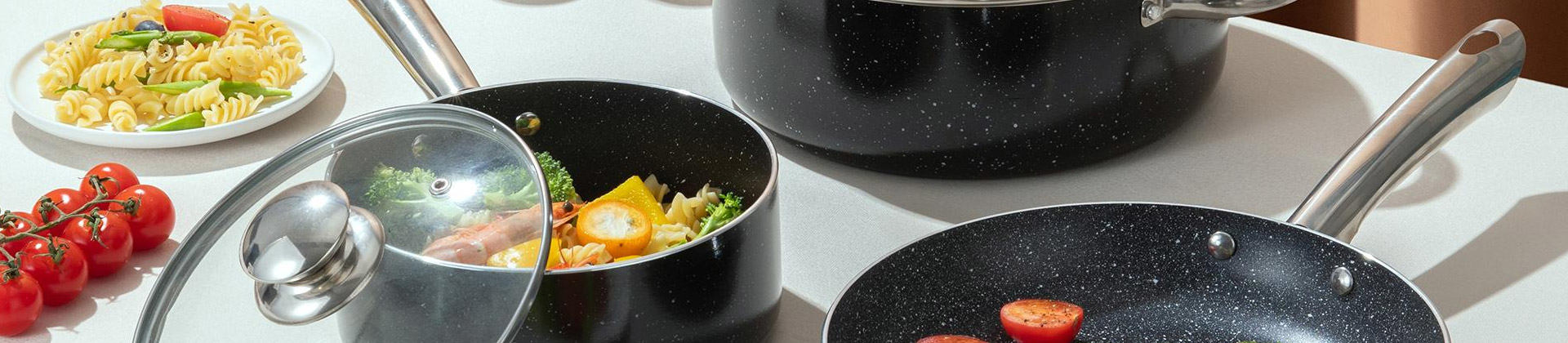
Aluminum Frying Pan Design: Meeting Growing Demand for Durable, Easy-to-Clean Cookware
Nov 13, 2026
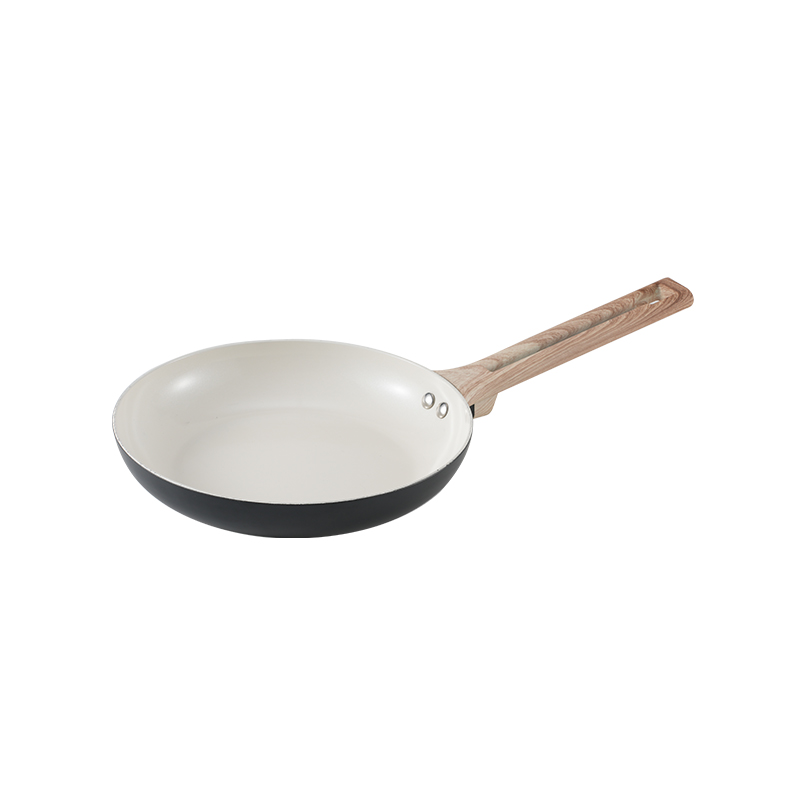
The global cookware market is seeing continued interest in products that combine convenient cooking, practical design, and reliable everyday performance. An Aluminum Frying Pan remains a popular choice for household cookware brands, retailers, and foodservice suppliers because aluminum offers good thermal conductivity and relatively lightweight construction. However, buyers are becoming more selective about coating quality, pan thickness, handle design, and compatibility with different cooktops. For manufacturers, addressing these details during product development is essential to meeting changing market expectations and reducing after-sales concerns.

Consistent Heat Distribution for Everyday Cooking
Heat distribution has a direct influence on cooking results. When a frying pan heats unevenly, food may brown too quickly in certain areas while remaining undercooked elsewhere. This is particularly noticeable when preparing eggs, pancakes, vegetables, and meat.
Aluminum is widely used in frying pan production because it transfers heat efficiently. However, the final performance also depends on the pan's thickness, base structure, and forming process. A properly designed body helps distribute heat across the cooking surface and provides a more consistent cooking experience.
From a manufacturing perspective, maintaining dimensional consistency during forming is equally important. Variations in the pan body can affect its stability and overall appearance.
Nonstick Coatings and Surface Durability
Nonstick performance remains an important purchasing consideration, especially for cookware sold through supermarkets, online retailers, and private-label channels. Consumers generally expect food to release easily and the cooking surface to remain convenient to clean after repeated use.
For buyers comparing different products, several details deserve attention:
- Coating adhesion to the aluminum substrate.
- Consistency of the coating across the cooking surface.
- Resistance to everyday wear and cleaning.
- Food-release performance during regular cooking.
Ceramic coatings have also attracted attention as consumers explore alternatives to traditional nonstick surfaces. Buyers should compare the actual coating composition and performance rather than relying entirely on marketing descriptions.
Changing Expectations Around Cookware Safety
Cookware material transparency has become increasingly relevant as consumers pay more attention to PFAS-related discussions and food-contact safety. Retailers and importers may request information about coating materials, manufacturing processes, and applicable compliance documentation before confirming an order.
For manufacturers, clear communication is important. Product descriptions should accurately explain the materials and coating characteristics without making unsupported safety claims.
Overseas buyers should also confirm that the selected cookware meets the applicable requirements of their target markets. Having relevant testing documents available can make supplier evaluation and product registration more straightforward.
Induction-Compatible Base Construction
The expansion of induction cooking has created additional requirements for aluminum cookware. Although aluminum offers good heat conductivity, standard aluminum is not magnetic and cannot work directly on induction cooktops.
An induction-compatible aluminum frying pan generally uses a magnetic stainless steel base or another suitable induction structure. This additional construction allows the pan to work with induction heating systems while retaining the lightweight characteristics of its aluminum body.
When sourcing cookware, buyers should check the compatibility of the base, its attachment quality, and the manufacturer's stated cooktop applications. This is particularly important for distributors supplying markets where induction appliances are widely used.
Handle Design and Practical Usability
A frying pan's handle affects both cooking comfort and product durability. An uncomfortable grip, unstable connection, or unsuitable handle material can reduce user satisfaction even when the cooking surface performs well.
Manufacturers need to consider handle shape, attachment structure, material selection, and heat resistance during product development. The relationship between handle weight and pan-body balance also deserves attention, as it influences how easily users can lift and move the cookware.
For private-label projects, handle finishes and appearance can also be adjusted to match different retail positioning requirements.
Cleaning Convenience and Product Maintenance
Easy cleaning is another feature that influences cookware purchasing decisions. Food residue that sticks to the surface can make daily kitchen tasks less convenient, while unsuitable cleaning methods may damage nonstick coatings.
To maintain cookware performance, users should avoid unnecessary overheating, use appropriate cooking utensils, and clean the pan with non-abrasive materials. Allowing the pan to cool before washing can also help reduce sudden temperature changes.
Providing clear care instructions with each product can help retailers reduce avoidable customer complaints and improve the overall ownership experience.
Manufacturing Consistency Supports Bulk Purchasing
For wholesalers, importers, and cookware brands, product quality must remain consistent across bulk orders. Differences in pan thickness, coating application, handle assembly, and surface finishing can create problems during retail distribution.
As a manufacturer, we recognize that these production details need attention throughout the manufacturing process. Buyers should evaluate not only the sample product but also the supplier's ability to maintain consistent specifications during mass production.
An Aluminum Frying Pan designed around heat distribution, coating performance, practical handling, and suitable cooktop compatibility can meet a wider range of everyday cooking requirements. By working closely with manufacturers and confirming key specifications before production, overseas buyers can develop cookware collections that better match consumer expectations and their target market positioning.
Share:
Related Products

Need Custom Cookware? OEM & ODM Experts – Contact Us Today!
-

0086-578-3183238
-

0086-13750930689
-

-

86-13750930689
https://www.pinterest.com/zhuohao2021/ -

No.3 Xinye Road, Jinyun Industrial Area, Zhejiang, China.
Copyright © Zhejiang Wantong Industry & Trade Co., Ltd.

OEM/ODM Kitchen Cookware Manufacturer