 0
0
 language
  English
 русский
 Français
 Español
 Português
 عربى
عربى
Why Aluminum Frying Pans Warp and What Users Ask
Jan 16, 2026
Warping — when the bottom of your frying pan is no longer flat — is a frequent concern shared by home cooks. Whether you’re considering purchasing from an Aluminum Skillet Manufacturer or opting for a Wholesale Frying Pan for your restaurant kitchen, understanding why pans warp can help you choose and care for cookware that lasts longer.
What Is Warping and Why It Happens
Warping is when a pan’s base becomes concave or convex, no longer making full contact with the stovetop. This can affect even heat distribution, cause uneven cooking, and frustrate even experienced chefs. At a basic level, warping happens because of thermal stress: the metal expands when heated and contracts when cooled, and if these changes aren’t uniform across the pan, the metal bends. Aluminum, being a soft and lightweight metal with a high coefficient of thermal expansion, is particularly susceptible to this effect.
For example, when the center of an aluminum pan gets hot while the rim remains cooler, the center expands more rapidly. Once cooled, this creates a permanent deformation as the metal solidifies in its altered shape.
Common Causes of Warping
Understanding the typical triggers can help you avoid this problem:
- Thermal Shock from Rapid Temperature Changes
Exposing a hot pan to cold water or rapid cooling causes a sudden contraction of part of the pan before the rest has cooled. This abrupt temperature shift, known as thermal shock, can cause warping.
- Overheating
Cooking at very high temperatures — especially when the pan is empty or nearly empty — accelerates uneven expansion. Aluminum heats up fast, and if the heat is concentrated in one area, the metal reacts by bending to relieve internal stress.
- Size Mismatch on Burners
When the pan is smaller or significantly larger than the burner, heat distribution becomes uneven. A small burner can concentrate heat in the middle of the pan, while edges stay cooler, pushing the material out of shape.
- Thin Metal Construction
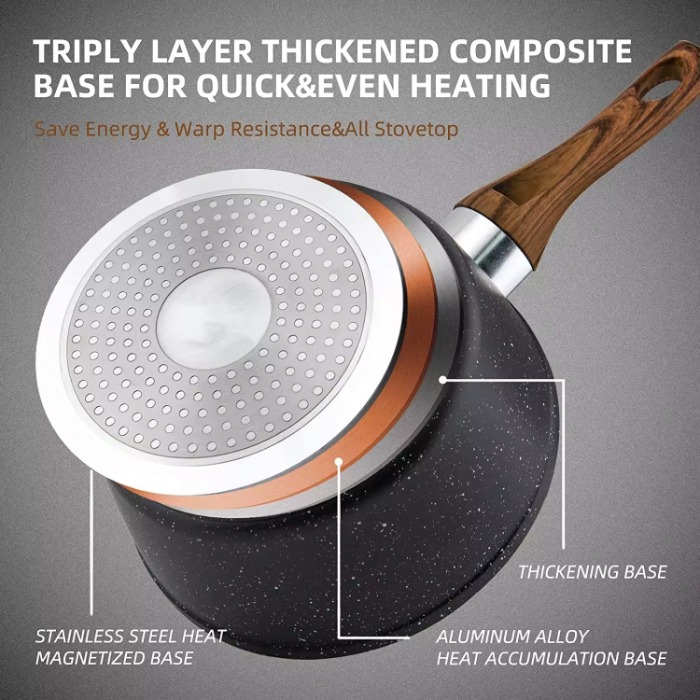
Cookware made with thin walls or a thin base is more vulnerable to warping. Thicker pans or those with reinforced bottoms resist deformation better because they distribute heat more evenly and have more material to absorb stress.
Real User Experiences with Warping
Several home cooks have shared stories of warping pans despite careful use. One user reported that their newly purchased pan became warped even without excessive heat, indicating that warping can occur surprisingly easily if the cookware isn’t engineered to handle stress well.
Another common comment from online cooking communities is that warping often happens to lightweight or budget pans. Users noted that even gentle cooking led to distortion over a few weeks, causing uneven cooking and frustration.
These shared experiences highlight that warping isn’t always caused by dramatic misuse. It’s often a combination of material properties, heat exposure, and how the pan interacts with stovetops.
Tips to Reduce Warping
While warping can’t always be avoided, some practices help:
- Preheat Gradually: Avoid heating the pan at full power from cold. Rise the heat slowly to distribute warmth more evenly.
- Match Pan Size to the Burner: Ensuring the base size closely matches the burner surface helps prevent concentrated hot spots.
- Avoid Plunging into Cold Water: Allow the pan to cool naturally before cleaning — this reduces stress from rapid temperature shifts.
- Choose Sturdier Cookware Options: Cookware with a thicker or reinforced base, including forged aluminum designs, tends to resist warping better.
If you’re planning to stock cookware for restaurants or bulk kitchens, choosing products with reinforced construction, like those offered by quality Wholesale Frying Pan suppliers such as Zhejiang Wantong Industry & Trade Co., Ltd., can help reduce complaints about warping over time.
Does Warping Mean a Defect?
Warping doesn’t always indicate a defective product. In many cases, it is simply a material response to heat stress. However, if warping happens under normal cooking conditions or shortly after purchase, it may point to poor material quality or insufficient structural support in the pan’s design. In these situations, warranty claims or replacement may be warranted.
Warping remains one of the more commonly discussed issues among cookware users — especially for aluminum-based pans. Understanding why it occurs and how to mitigate it helps you make better choices when selecting an Aluminum Skillet Manufacturer or planning a bulk purchase of Wholesale Frying Pans for professional kitchens. With thoughtful use and attention to heat management, you can minimize warping and maintain flat, functional cookware that supports consistent cooking performance.
Share:
Related Products

Need Custom Cookware? OEM & ODM Experts – Contact Us Today!
-

0086-578-3183238
-

0086-13750930689
-

-

86-13750930689
https://www.pinterest.com/zhuohao2021/ -

No.3 Xinye Road, Jinyun Industrial Area, Zhejiang, China.
Copyright © Zhejiang Wantong Industry & Trade Co., Ltd.

OEM/ODM Kitchen Cookware Manufacturer